Estimated reading time: 8 minutes
Spiritual products are moving from niche markets into everyday shopping habits. Buyers are exploring tarot card meanings, aura readings, astrology, oracle decks, and other tools for reflection, relationships, self-care, and personal growth. That shift creates an interesting opportunity for you as a reseller.
If you want help keeping up with listing, marketing, and business tasks, explore Marblism through Danna’s referral link. Its AI employee team can help you organize content, improve SEO, manage follow-up tasks, and keep your online business moving while you focus on sourcing and sales.
Why Spiritual Products Are Getting Attention in 2026
Google search behavior shows that people are curious about bringing spiritual practices into their daily routines. They are blending do-it-yourself exploration with guidance from readers, coaches, creators, and online shops.
Recent search trends include:
- “Aura reading” reaching a record high this year.
- Breakout searches for “how to find your aura color” and “can your aura color change.”
- Growing searches for tarot card meanings and spiritual guidance around love and relationships.
- “Is tarot card reading witchcraft” becoming a breakout search.
- “Are tarot card readings real” increasing by more than 3,300% over the past month.
- Searches for “real love spells that work” and “how to cast a love spell on someone” breaking out recently.
- “Left ear ringing meaning” reaching an all-time high, with spirituality as the leading related topic.
- Dragonflies and ladybugs appearing among the top insects connected with spirituality-related searches.
This does not mean every spiritual product will sell automatically. It does show that buyers are actively researching the niche. They want products that feel meaningful, beautiful, giftable, and easy to understand.
That is where a well-researched tarot card listing can get noticed.
Which Tarot Decks Should You Resell?
You do not need to stock every deck you find. Start by understanding what makes a deck appealing to buyers.
1. Decks Connected to Popular Tarot Cards
The Wheel of Fortune and The Empress are the top searched tarot cards in 2026 so far.
The Wheel of Fortune is often associated with cycles, change, timing, luck, and turning points. The Empress is commonly connected with abundance, creativity, nurturing, beauty, and self-care.
When you list a deck, look closely at its artwork and guidebook. Does it prominently feature these cards? Does the theme connect to abundance, relationships, career changes, creativity, or personal growth?
Use accurate language such as:
- “Tarot deck featuring Wheel of Fortune and Empress imagery”
- “Beginner tarot deck with illustrated guidebook”
- “Creative self-reflection tarot card set”
- “Classic tarot deck for spiritual journaling”
Avoid promising guaranteed predictions or outcomes. Buyers appreciate clear descriptions, and marketplaces expect honest product information.

2. Beginner-Friendly Tarot Decks
New readers often look for decks that include:
- A full guidebook.
- Card meanings printed directly on the cards.
- Clear imagery.
- Standard card sizes.
- A simple storage box.
- A beginner guide or spread reference.
Complete beginner sets can be especially attractive as gifts. Check that the deck includes all cards and the original guidebook before you describe it as complete.
3. Indie, Limited-Edition, and Out-of-Print Decks
Rare and discontinued decks can appeal to collectors. Look for:
- First editions.
- Kickstarter releases.
- Small print runs.
- Signed or numbered editions.
- Independent artists and publishers.
- Special finishes such as gilding or foil.
- Unusual themes or regional artwork.
- Complete sets with original packaging.
Do not guess that a deck is rare. Verify the edition, publisher, publication date, and condition. Search completed sales before buying deeply.
4. Oracle and Themed Decks
Oracle cards are adjacent to tarot but usually follow different structures and systems. Buyers may search for:
- Moon-phase oracle cards.
- Astrology decks.
- Shadow-work cards.
- Nature and folklore decks.
- Animal spirit cards.
- Career and decision-making decks.
- Love and relationship reflection decks.
- Witchy or mystical gift items.
Search interest around Etsy witches also includes wedding weather, jobs, and love spells. That points to several buyer motivations: planning, career questions, relationships, and curiosity.
You can serve those interests without making unsupported claims. Sell the physical product. Describe its theme. Explain what is included. Let the customer decide how to use it.
Selling Tarot Cards on eBay and Etsy
Both marketplaces can work, but they attract slightly different buying habits.
eBay: Strong for Resale and Collectibles
eBay is a solid option for mass-market decks, used decks, vintage editions, and collectible inventory. Buyers often search by exact title, publisher, edition, and condition.
Use your eBay Seller Center account tools to stay current with listing requirements and marketplace policies.
For pricing, study completed and sold listings. Active listings show what sellers hope to receive. Sold listings show what buyers actually paid.
You can also browse Danna Crawford’s eBay store for examples of how products are presented online.
Etsy: Strong for Aesthetic and Giftable Products
Etsy can be a good fit for new decks, indie products, spiritual gift bundles, and visually distinctive inventory. Buyers often respond to presentation, styling, and a clear product story.
Before listing used or vintage inventory, review Etsy’s current seller requirements. Be precise about age, condition, and whether an item is handmade, designed, or resold.
On either platform, your photos and title do much of the heavy lifting.
Create Listings That Help Buyers Feel Confident
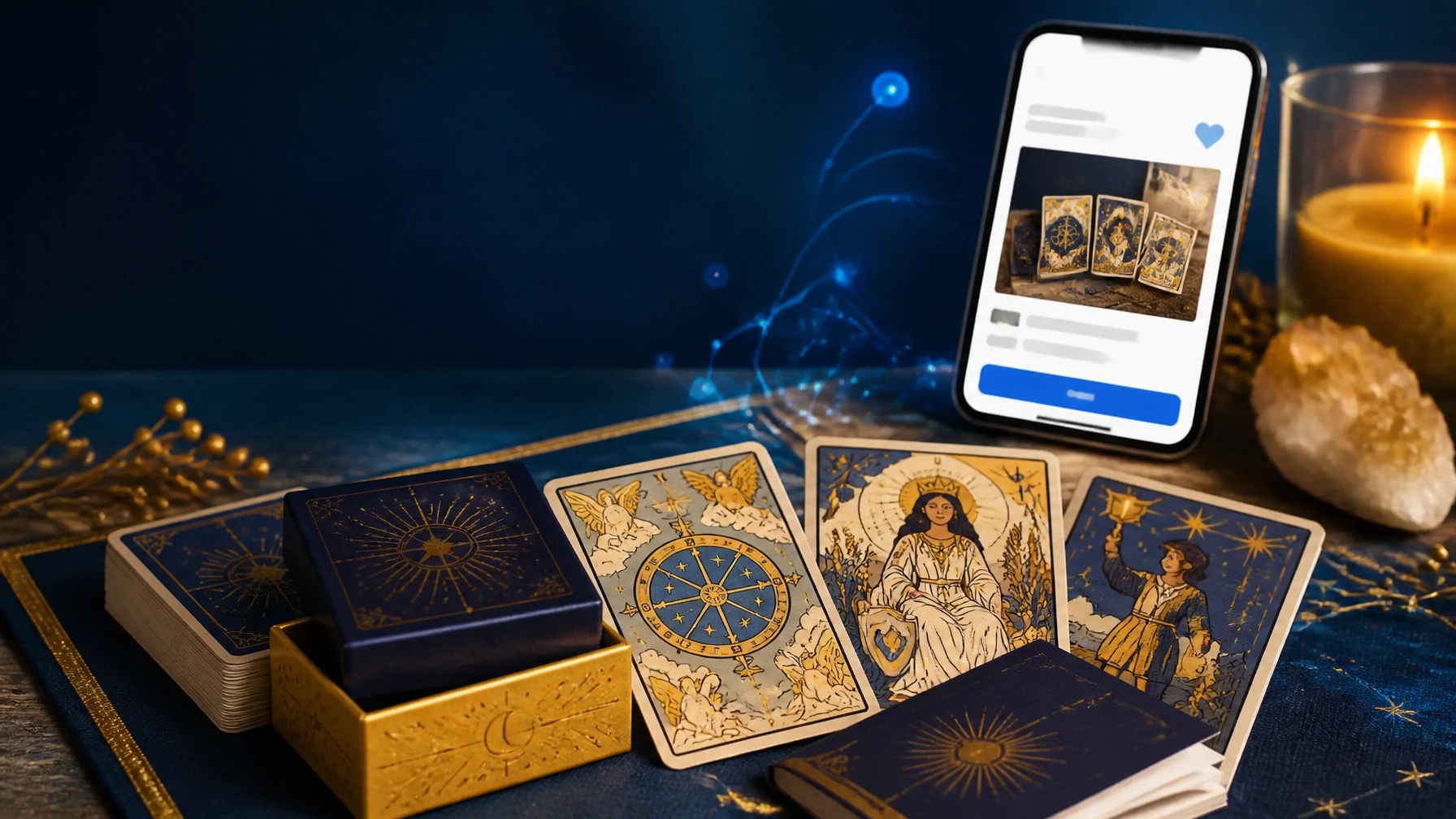
Your first image should show the complete deck and packaging clearly. Then add photos of:
- The front of the box.
- The back of the cards.
- Several sample cards.
- The guidebook or included accessories.
- Any wear, bends, scratches, stains, or missing pieces.
- The card count if the deck is used.
Use a clean background. Avoid heavy filters. Buyers need to see color, edges, corners, and packaging accurately.
Your SEO title should lead with the most important information:
Brand + Deck Name + Tarot or Oracle + Edition + Complete/Used/New + Key Feature
For example:
Vintage Tarot Deck Complete With Guidebook 1970s Occult Card Set
Or:
Beginner Tarot Card Set With Guidebook New Sealed Astrology Theme
Do not stuff every spiritual keyword into one title. Google and marketplace search engines prefer relevance. Buyers do, too.
Use your description to answer practical questions:
- Is the deck new or used?
- How many cards are included?
- Is the guidebook included?
- Is the box original?
- Are there odors, marks, or missing cards?
- What is the publisher and edition?
- What are the package dimensions?
- How will it be shipped?
If the deck has been personally used in a spiritual practice, describe it neutrally as “pre-owned” or “previously used.” Do not claim that it has been magically cleansed or guarantees a specific result unless you can support the statement and the marketplace allows it.
Use AI to Build a Smarter Tarot Reselling Workflow
Tarot listings can take longer than expected because every deck has different artwork, terminology, card counts, and condition details. AI can help you create a repeatable process.
With Marblism’s AI employee team, you can use different roles to support the business work surrounding your listings:
- SEO support: Generate keyword ideas based on the deck name, theme, edition, and buyer intent.
- Description support: Turn your notes into a clear, structured listing description.
- Inventory support: Organize deck names, publishers, editions, purchase costs, listing dates, storage locations, and sale prices.
- Pricing support: Create a pricing worksheet from the sold-comps data you collect.
- Content support: Draft social posts about new inventory, seasonal gift ideas, or beginner tarot sets.
- Administrative support: Create follow-up reminders for stale listings, offers, shipping tasks, and customer messages.
Marblism’s AI employees include roles for SEO, social media, executive assistance, website building, lead generation, and more. You can learn more through Danna’s Marblism referral link.
The key is to use AI as your assistant, not your final decision-maker. You still need to:
- Verify sold prices.
- Count the cards yourself.
- Inspect the deck condition.
- Confirm edition details.
- Check marketplace policies.
- Review every AI-generated description.
- Remove claims you cannot prove.
AI can help you bump up your speed. Your judgment protects your reputation.

Price Tarot Decks From Real Sales Data
Start with the Power Selling Mom reseller pricing strategies guide. The core idea is simple: price from actual sold data, not wishful thinking.
Track:
- Average sold price.
- Highest and lowest comparable sale.
- Condition differences.
- Shipping costs.
- Marketplace fees.
- Whether the deck is complete.
- How quickly similar listings sell.
If comparable decks sell around $35, you might list slightly higher if your deck is complete, clean, and includes the original packaging. Leave room for offers, but protect your minimum profit.
A $5 purchase is not automatically a good buy. Calculate your likely net profit after fees, shipping, packing materials, and your time.
Time Your Listings Around Seasonal Interest
Spiritual products can sell throughout the year, but demand may rise around:
- Halloween and other autumn spiritual themes.
- Holiday gift shopping.
- New Year reflection and goal-setting.
- Valentine’s Day and relationship-focused products.
- Birthdays and milestone gifts.
- Spring cleaning and estate-sale sourcing.
Use the Power Selling Mom seasonal selling guide to plan inventory and listing timing.
The 90-day approach is helpful. Start preparing seasonal products before the busiest shopping window. This gives you time to photograph, research, list, and improve visibility before buyers are ready to purchase.
Learn With Other Sellers
You do not have to figure out every listing question alone. Search Facebook for communities such as eBay Selling Tips and The Power of the eBay Community. Look for active groups with clear rules, helpful moderation, and practical discussions about pricing, photos, shipping, and marketplace policies.
You can also visit the official eBay Community for seller discussions and platform guidance.
For more real-world conversations about online selling, listen to The Power Selling Podcast. Danna covers e-commerce, reselling, technology, mindset, and the behind-the-scenes work of building a business.
You May Have Missed! The podcast recently featured a conversation about an AI listing tool that turns photos into eBay drafts. It is another reminder that the future of reselling belongs to sellers who combine practical knowledge with smart technology.
Start Small and Test the Market
Selling tarot cards online can be a profitable niche when you approach it like a business. Research the deck. Photograph it honestly. Use buyer-focused keywords. Price from sold comps. Track your results.
Start with a small test batch of complete, clean, easy-to-identify decks. Watch which themes receive views, offers, and sales. Then use that information to guide your next sourcing trip.
The spiritual marketplace is getting noticed. With strong listings, accurate research, and AI support from Marblism, you can turn that attention into a smarter reselling opportunity.
Spread the love by sharing this guide with another reseller who enjoys uncovering unusual inventory.
- Top 10 eBay Selling Strategies for Q4 Success

- What eBay’s Watchlist Data Says About Fall 2026 Resale Trends

- How to Start a Podcast for Your Reselling Business (Using Riverside)

- My AI Sidekick: How AI Can Make Everyday Life and Business Easier

- AI Is Changing How Shoppers Find Your Listings: How to Prepare
- StockX Now Sells Used Sneakers: Should Resellers Care?