If you’re a reseller looking to expand your business onto a growing marketplace, Depop might be your next big opportunity.
Key Takeaways
- Depop is a rapidly growing marketplace for resellers, offering opportunities beyond vintage items.
- The platform has low fees, allowing for higher profit margins compared to competitors like eBay and Poshmark.
- Sellers should maintain daily activity and build a strong profile to enhance trust and visibility.
- Understanding the Depop algorithm is crucial; descriptions drive search visibility rather than titles.
- Overall, Depop provides an inviting and community-driven environment for new and existing online sellers.
In a recent episode of the Power Selling Podcast, I had the honor of speaking with Lucy Hoffman from Depop’s Seller Growth team, and she shared insider insights that every reseller should hear — especially if you’re new to the platform or wondering whether it’s worth your time.
Let’s break down why Depop is gaining serious traction in the U.S., how it’s different from other platforms, and exactly what you need to do to succeed.
Why Choose Depop?
Depop has evolved far beyond its early reputation as a Gen-Z vintage marketplace. While it’s still a hot spot for Y2K fashion and curated vintage pieces, Lucy made one thing very clear:
Almost anything can sell on Depop.
If an item performs well for you on eBay, Poshmark, or Mercari, there’s a strong chance it can perform well here too.
1. Low Fees = Higher Profit Margins
One of the biggest selling points?
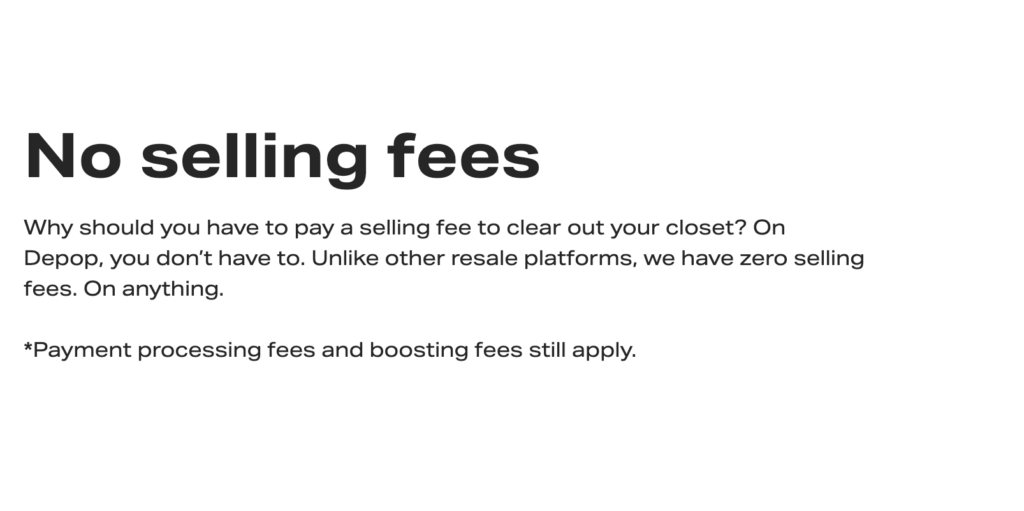
Depop does not charge traditional selling fees.
Unlike other platforms that can take 15–20% of your sale, Depop only charges a payment processing fee (around 3% + standard processing). That means more money stays in your pocket.
For resellers operating on tight margins, that difference adds up quickly.
2. A Rapidly Growing Buyer Base
Depop is expanding aggressively in the U.S. market. That means:
- More active buyers
- More search traffic
- More opportunity for discovery
Getting in early while the platform is growing can give sellers a competitive advantage before the marketplace becomes saturated.
Getting Started on Depop the Right Way
Lucy emphasized something that many new sellers overlook:
Consistency beats volume.
Daily Activity Wins
Instead of listing 30 items in one day and disappearing for a week, try this strategy:
- List at least one item per day
- Spread listings throughout the week
- Stay active and engaged
The Depop algorithm rewards consistent activity. Showing up daily keeps your shop visible in feeds and search results.
If you’re cross-listing (which many of us do), this approach fits beautifully into your workflow.
Build a Profile That Builds Trust
Depop is community-driven. Buyers want to feel like they’re shopping from a real person, not a faceless storefront.
Here’s what Lucy recommends:
✔ Add a Profile Picture
Use your shop logo or a clear, friendly image of yourself.
✔ Write a Strong Bio
Outline:
- What you sell
- Your shipping timeline
- Your shop policies
✔ Encourage Reviews
After an item is delivered, send a polite message thanking the buyer and encouraging them to leave feedback.
Reviews build credibility fast — especially for new sellers. The more social proof you have, the easier it is to convert browsers into buyers.
Understanding the Depop Algorithm
Here’s where Depop really differs from other platforms.
Unlike eBay or Poshmark, Depop does not use a traditional title field.
Instead, your description drives search visibility.
Lucy shared a powerful tip:
The first 3–5 words of your description matter the most.
Think about what buyers would actually type into search.
For example:
❌ “Super cute top, great condition”
✔ “Vintage 90s Levi’s Denim Jacket”
Those first few words are critical because they determine where your item appears in search feeds.
Search feeds play a massive role in discovery on Depop. Optimizing those opening keywords can dramatically increase visibility.
Cross-Listing Without Fear
For multi-platform sellers, this is huge:
If you need to cancel a sale on Depop because an item sold elsewhere, it does not automatically hurt your visibility.
Your account is only affected if your dispute rate exceeds 5%.
That’s a breath of fresh air for resellers who list across multiple marketplaces. You can test Depop without feeling like one mistake will tank your account.
Non-Binding Offers: What You Need to Know
Depop’s offer system is different — and this confuses many new sellers.
Here’s how it works:
- A buyer makes an offer.
- You accept the offer.
- The sale is not final until the buyer completes checkout.
That means accepted offers are non-binding.
So don’t:
- Pack the item immediately.
- Mark it as fully sold in your inventory system.
- Celebrate too early.
Lucy recommends being aware of this process to avoid frustration.
Bonus: Auto-Reply Feature
Depop has introduced an auto-reply feature for offers, helping sellers streamline communication.
This saves time and reduces the back-and-forth messaging that can eat into your workflow.
What Actually Sells on Depop?
While vintage and Y2K styles dominate social media perception, Lucy emphasized that Depop buyers are expanding their tastes.
Successful categories include:
- Streetwear
- Denim
- Sneakers
- Graphic tees
- Trend-driven fashion
- Sustainable fashion
- Unique curated pieces
But here’s the key:
Presentation matters.
Depop is visual. Clean photos, styled images, and authentic branding perform extremely well.
If you can tell a story with your item, you’ll stand out.
Is Depop Worth It for Resellers?
If you’re already selling online, adding Depop could:
- Diversify your income streams
- Reduce reliance on high-fee platforms
- Help you reach a younger buyer demographic
- Increase overall inventory turnover
And because of the low fee structure, your profit margin can be stronger than on many other marketplaces.
For new resellers, Depop can also be less intimidating. The platform feels more social, less corporate, and very community-focused.
Final Takeaways for New Depop Sellers
Here’s your quick action plan:
- Start listing consistently — at least one item daily.
- Optimize your first 3–5 words in every description.
- Build a complete profile with clear shop rules.
- Encourage reviews after delivery.
- Understand non-binding offers before you accept them.
- Don’t fear cross-listing — just monitor your dispute rate.
Depop is not just another resale app. It’s a growing ecosystem with real opportunity for sellers who understand how it works.
And as Lucy shared on the podcast — sellers who show up consistently, optimize their descriptions, and engage with buyers are the ones who see results.
If you’re a reseller looking for your next growth move, Depop might just be it.
Use my link to sign up for depop and be entered to win a special mystery box with a $125.00 value: https://depop.app.link/psmom
Watch the full Episode
Listen In
- Struggling for Reselling Profits? 50+ AI Prompt Examples to Try TodaySpread the love Estimated reading time: 9 minutes If your reselling profits feel stuck, your next move may not be sourcing more inventory. It may be working smarter with the inventory, listings, and customer conversations you already have. AI can help you create stronger titles, organize your research, write clearer descriptions, plan bundles, and save… Read more: Struggling for Reselling Profits? 50+ AI Prompt Examples to Try Today
- Top 10 eBay Selling Strategies for Q4 SuccessSpread the love Estimated reading time: 9 minutes Q4 can bring a welcome bump in eBay sales. It can also bring late-night packing sessions, inventory shortages, buyer questions, shipping delays, and a return pile that seems to grow overnight. The difference is preparation. You do not need to overhaul your entire business before the holiday… Read more: Top 10 eBay Selling Strategies for Q4 Success
- What eBay’s Watchlist Data Says About Fall 2026 Resale TrendsSpread the love Estimated reading time: 8 minutes eBay’s Watchlist data is a treasure map for resellers. It shows where shoppers are looking, which labels are regaining momentum, and what kinds of details can move an item from “maybe” to “must-have.” As you plan your fall 2026 inventory, you can use those signals to source… Read more: What eBay’s Watchlist Data Says About Fall 2026 Resale Trends
- How to Start a Podcast for Your Reselling Business (Using Riverside)Spread the loveEstimated reading time: 8 minutes Podcasting gives you a fresh way to grow your reselling business, build trust, and connect with other sellers. You can share sourcing stories, explain how you price inventory, interview marketplace experts, and help new sellers avoid costly mistakes. You do not need a fancy studio to get started.… Read more: How to Start a Podcast for Your Reselling Business (Using Riverside)
- My AI Sidekick: How AI Can Make Everyday Life and Business EasierSpread the love Estimated reading time: 7 minutes A New Book for Making AI Feel Simple Artificial intelligence does not have to feel overwhelming. In fact, it can become one of the most practical tools in your everyday life. That is the message behind Danna Crawford’s new book, My AI Sidekick: AI Made Simple :… Read more: My AI Sidekick: How AI Can Make Everyday Life and Business Easier