Estimated reading time: 8 minutes
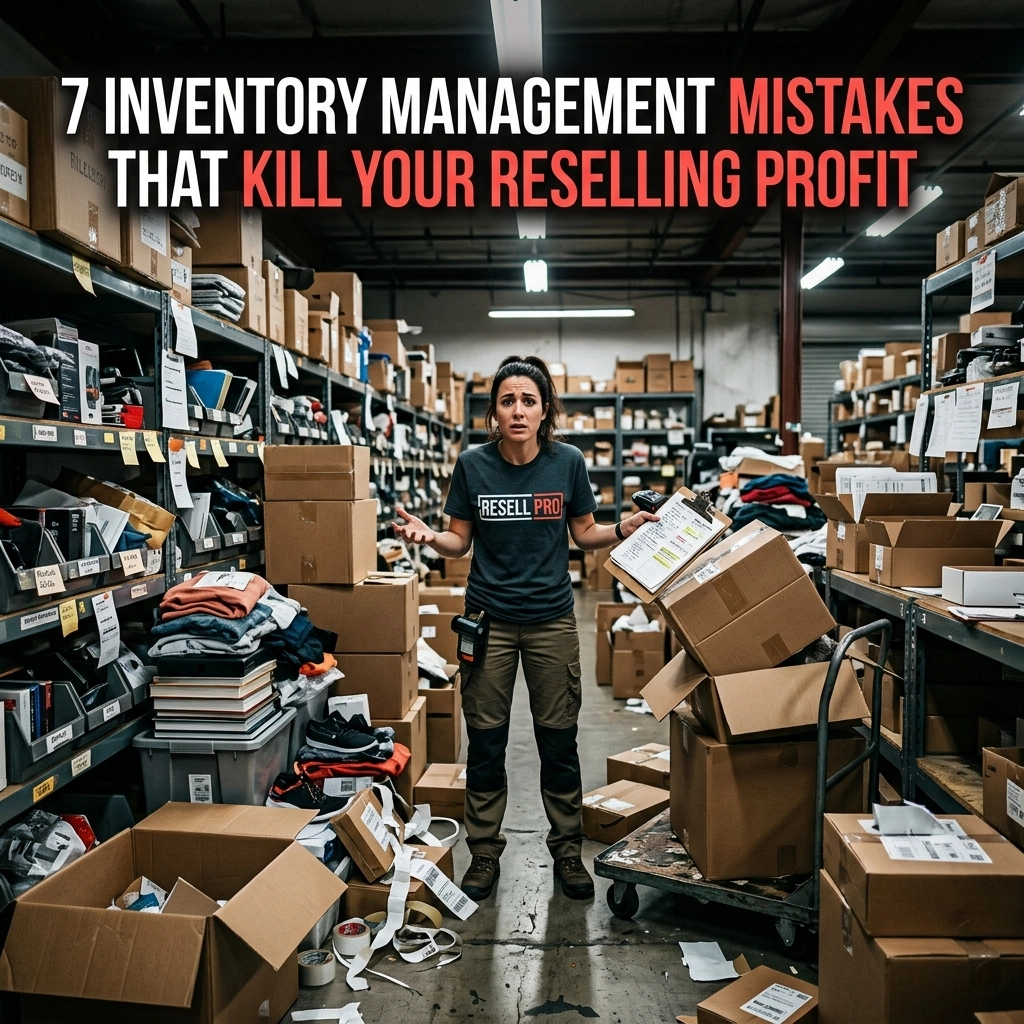
Hey there, fellow resellers! We’ve all been there: your spare room is overflowing, your dining table has disappeared under a mountain of bubble wrap, and you’re pretty sure there’s a pair of vintage boots somewhere in the pile that you bought three months ago.
Managing inventory is one of the most challenging parts of running a successful e-commerce business. It’s easy to get caught up in the “thrill of the hunt” at thrift stores or estate sales, but if you don’t have a solid system in place, those great finds can quickly turn into a financial nightmare.
I’ve been in this game a long time, and I recently celebrated a big milestone: turning 65! Reaching that age really makes you think about working smarter, not harder. It’s actually what inspired me to create my “Turning 65: A Fun Activity Book”. I wanted to create something niche and meaningful that didn’t require me to store 500 physical boxes in my garage. That’s the beauty of strategic inventory: knowing exactly what you have and why you have it.
If you want to keep your business profitable in 2026, you have to avoid these seven common inventory management mistakes. Let’s dive in!
1. Relying on Manual Processes and “Brain Power”
One of the biggest mistakes I see resellers make is trying to keep everything in their heads or on a messy spreadsheet. When you’re just starting with ten items, a spreadsheet is fine. But when you scale? Manual processes lead to slow intake, human error, and: the absolute worst: selling an item on eBay that you already sold on Mercari because you forgot to delist it.
If only you or one other person understands your “system,” you have a major operational risk. If you get sick or want to take a vacation (like my recent business trip to the Bahamas), your business grinds to a halt.
The Fix: Use AI tools and specialized inventory software. Real-time insights tell you what’s in stock, what’s moving, and what’s just collecting dust.
2. The “I Think It’ll Sell” Trap (Lack of Planning)
Are you buying items because the data says they sell, or because you just have a “feeling”? Without proper demand forecasting, you’re essentially gambling with your grocery money. Research shows that about 34% of businesses have to ship orders late because products were unexpectedly out of stock. In the reselling world, the opposite is usually true: we have too much of the wrong stuff.
The Fix: Use historical sales data. Check your eBay research tools to see the “sell-through rate” of an item before you buy it. If only 10% of listed items of that type sold in the last 90 days, leave it on the shelf!

3. Seasonal Amnesia
Buying winter coats in April? That might be a great strategy if you have the space to store them until October, but most resellers don’t. A classic mistake is buying the same types of items year-round without considering seasonal demand. For example, a pet supply reseller might stock up on heavy dog jackets in January, only to find they aren’t moving in May when everyone is looking for flea treatments.
The Fix: Plan your sourcing trips around the upcoming season, not the current one. Use Inventory Management techniques to cycle your stock. If you have “death piles” of out-of-season clothes, box them up and label them clearly so they don’t clutter your daily workspace.
4. Emotional Overstocking
We’ve all done it. You see a huge pallet of liquidated merchandise and your heart starts racing. “Think of the profit!” you tell yourself. But many resellers overbuy based on emotion rather than space or cash flow. This erodes your margins because your capital is tied up in items that might take a year to sell.
When I designed my axolotl coloring books and my “Turning 65” book, I did it because I saw a specific need and a trending interest. It wasn’t just because I liked the pictures (though I do!). It was a calculated move into a niche market.

The Fix: Start small. Test a new category with five items before you buy fifty. Reinvest your profits gradually rather than dumping your entire savings into a “sure thing” pallet.
5. Inconsistent or Gut-Feeling Pricing
If you don’t have a clear view of your inventory costs (including what you paid, shipping supplies, and platform fees), your pricing will be all over the place. Underpricing means you’re working for free; overpricing means your inventory turns into “permanent residents” in your home.
The Fix: Look at the data. Successful reselling requires looking at performance by brand and category. If you notice your Etsy shop is moving vintage items at a 40% higher margin than eBay, adjust your inventory flow accordingly.
6. Scaling Too Quickly Without Systems
It’s tempting to want to go from 100 listings to 1,000 listings overnight. But if you don’t have the physical space or the organizational system to handle that volume, you’ll end up in “operational chaos.” This leads to lost items, mixed-up shipping labels, and stressed-out late-night packing sessions.
The Fix: Scale gradually. Focus on categories that consistently perform well and have a high eBay SEO value. Only increase your inventory volume when your current system feels “easy.” If you’re struggling now, more items will only make it worse.
7. Neglecting the Small Operational Details
Sometimes it’s not the inventory itself that kills the profit: it’s how you handle it. Bad photos, vague descriptions, and slow shipping times are profit killers. If an item sits for six months because your photos were blurry, that’s six months of that money being “stuck” instead of being reinvested into fresh stock.
The Fix: Professionalize your process. Treat every item like a high-end boutique would. Great lighting, clear titles, and fast shipping will help your inventory turn over much faster. You can learn more about these “best practices” over at my eBay store to see how I list my items.
You May Have Missed!
If you’re looking to dive deeper into the technical side of things, check out our guide on Why AI Tools for Resellers Will Change the Way You List Forever.
Wrapping It Up
Inventory management isn’t just about organizing boxes; it’s about protecting your cash flow and your sanity. By avoiding these seven mistakes, you’ll find that your business runs smoother, your customers are happier, and: most importantly: your bank account stays healthy.
If you want to get serious about using modern tools to automate these tasks, come join us at AI for Resellers. It’s our primary community where we talk about how to use the latest technology to stay ahead of the curve. It’s currently only $6/month, and it’s the best investment you can make in your business growth. Check it out at aiforresellers.com.
Spread the love! If this helped you, share it with your favorite reselling group. Let’s all grow together!