Estimated Reading Time: 8 minutes
You’ve done it. You found a great item, cleaned it up, took some decent photos, and hit that “List” button. Now comes the hard part: the waiting. You’re likely sitting there hitting the refresh button on your Seller Hub, wondering if that “Cha-ching” notification is ever going to pop up.
If you’re a new seller, the silence can be deafening. You start to second-guess everything. Is my price too high? Is my title garbage? Does anyone even want this 1990s windbreaker?
The truth is, there is no magic number. eBay isn’t a vending machine where you put in a listing and a sale pops out 15 minutes later. However, there are very specific patterns and variables that dictate whether your item sells in twenty minutes or stays in your spare bedroom for twenty months. Let’s dive into the reality of eBay sell-through rates and how you can actually speed up the clock.
The Reality Check: Days vs. Months
Based on market data and the experiences of thousands of resellers, the timeline for a sale can range anywhere from one day to over a year.
I know, that’s a huge gap. But look at the data: specialty items or vintage niche pieces often take much longer to find the “right” buyer. On the flip side, a hot tech gadget priced $10 below market value will likely be gone before you can finish your cup of coffee.
According to real-world sales tracking:
- Some items move fast, around 14 to 21 days.
- Standard “bread and butter” items (like mid-range clothing or household goods) often take 45 to 90 days.
- Long-tail items (vintage collectibles, niche replacement parts) can easily sit for 180 to 300+ days.
Don’t let those long numbers scare you. Reselling is often a game of volume. The more you have listed, the more consistent those daily sales become, regardless of how long any single item has been sitting.

The “Big Five” Variables That Control Your Speed
If you want to move from the “300-day club” to the “weekend warrior” status, you have to master these five variables. These are the levers you can pull to make items sell faster.
1. Demand (The Market Hunger)
This is the most important factor. If nobody is looking for what you’re selling, it doesn’t matter if your price is $1. You could be selling the world’s best-preserved typewriter ribbon, but if the world has moved on to digital, you’re going to be waiting a while. Before you buy inventory, always check the “Sell-Through Rate” by looking at “Sold” listings versus “Active” listings on eBay.
2. Pricing Strategy
Price is the ultimate “fix-it” tool. If an item isn’t selling, 90% of the time, the price is the culprit.
- Priced to Move: If you price your item at the lowest “Buy It Now” price on the platform, expect a fast sale.
- Priced for Profit: If you are holding out for the top-tier price, prepare to wait.
3. Item Condition
Condition matters more in some categories than others. For electronics, “For Parts/Not Working” might sell fast to a refurbisher. For clothing, a small stain or a tiny hole can turn a 2-week sale into a 2-year “no thanks.” Be honest, be detailed, and price accordingly.
4. Seasonality
You probably won’t sell a heavy wool parka in the middle of a July heatwave in Florida. While eBay is a global marketplace (and it’s winter somewhere!), the majority of your buyers follow the local calendar. To speed things up, list items about 30 days before the season starts.
5. Visibility and SEO
If buyers can’t find your item, they can’t buy it. This is where your title and item specifics come into play. eBay’s search engine, Cassini, loves data. The more boxes you check in the item specifics section, the more likely you are to show up when someone filters their search.

Category Breakdown: What Moves Fast?
Not all categories are created equal. If you want quick flips, you need to know where the action is.
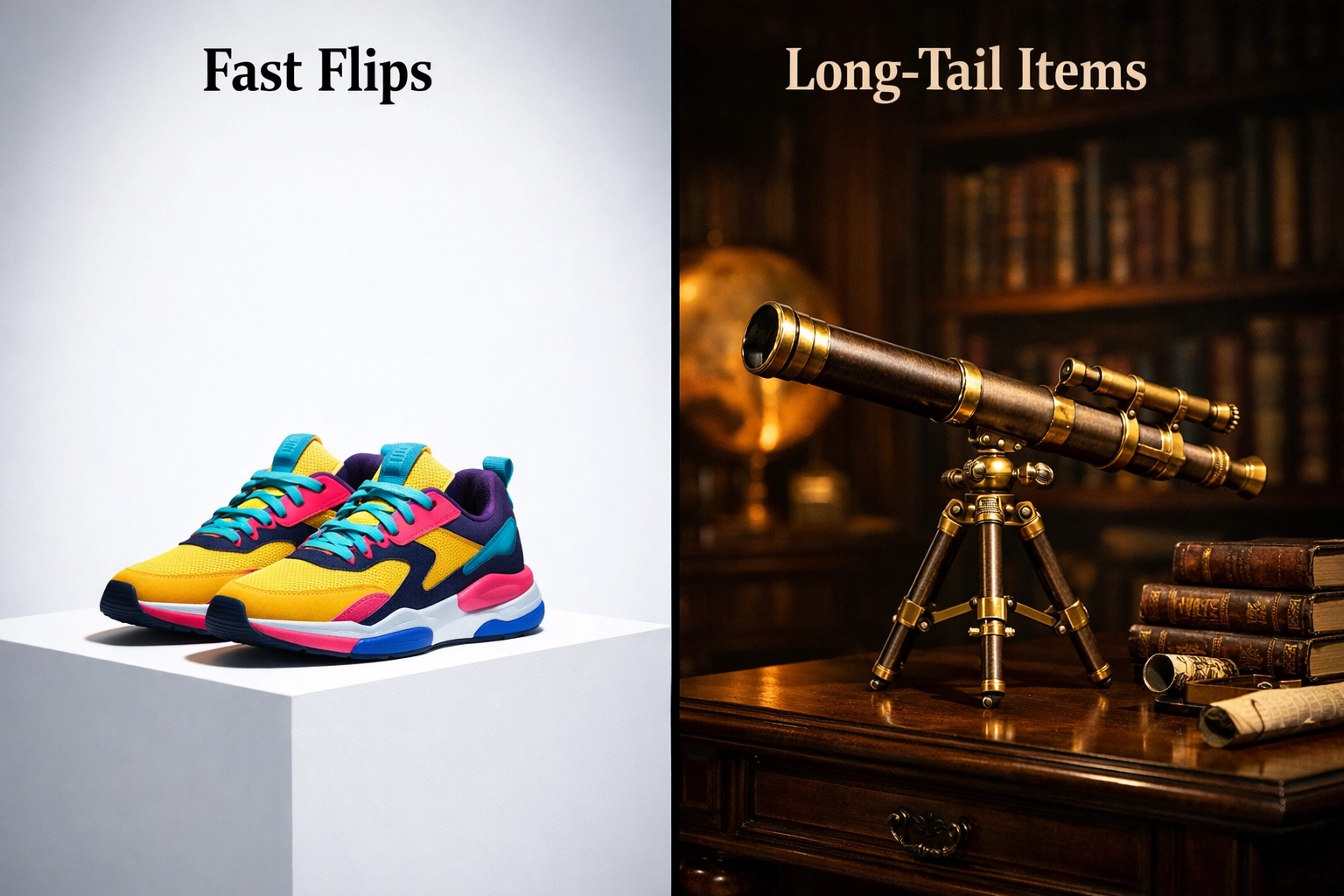
- Fast-Moving Items: High-end sneakers, current-gen electronics, popular video games, and trending toys. These often have a sell-through rate of 1-2 weeks.
- The Long-Tail Items: Vintage linens, specialized auto parts, high-fashion evening wear, and obscure collectibles. These are “wait for the right buyer” items.
For example, vintage t-shirts are incredibly popular right now, but they are also highly subjective. A vintage tee might average 43 days on the market, while a pair of standard Levi’s jeans might take 60 days because the competition is so high.
If you want to learn more about how to navigate these categories and use modern tools to your advantage, you should definitely check out our Business category for more deep dives into strategy.
How to Speed Up the Process
Tired of waiting? Use these “pro moves” to bump your items to the top of the search results and catch a buyer’s eye.
- Promoted Listings: eBay allows you to pay a small percentage of the sale price to “boost” your item in the search results. It’s a pay-to-play world, and sometimes a 2% or 3% ad rate is all it takes to get noticed.
- Send Offers to Buyers: When someone “watches” your item, they are essentially standing in your store looking at the price tag. Give them a nudge! Send a 5% or 10% discount offer to close the deal.
- Run a Sale: Use the “Markdown Manager” to put your items on sale. Psychologically, seeing a “20% OFF” banner can trigger a purchase.
- Refresh Your Photos: If an item has been sitting for 90 days, your photos might be the problem. Try a clean, white background and ensure you have at least 8-12 high-quality shots.
- Optimize Your Titles: Stop using “L@@K” or “RARE” in titles. Use keywords that people actually type into the search bar, like brand, size, color, and material. Check out our tips on eBay SEO to master the algorithm.
Don’t Do This Alone: Join the Community
Reselling can feel like a lonely island, especially when your sales are slow and you aren’t sure why. That’s exactly why we created the AI for Resellers membership.
For just $6 a month, you get access to a community of like-minded sellers and expert insights on how to use AI and modern technology to streamline your business. We help you work smarter, not harder, so you can spend less time guessing and more time growing your bank account. Head over to aiforresellers.com to join us!
The “End Game” Mindset
If you want to be a successful Power Selling Mom, you have to balance your inventory. A healthy eBay store has a mix of:
- Fast Flips: Low-margin but high-velocity items that keep the cash flowing.
- Bread and Butter: Reliable sales that move every month or two.
- Long-Tail: High-profit items that take a year to sell but pay for your vacation when they do.
Understand that “no sales today” doesn’t mean “failure.” It just means the right buyer hasn’t logged on yet. Keep listing, keep optimizing, and keep your head in the game.

You May Have Missed!
Check out our previous guide on how to organize your inventory so that when that sale finally happens, you can find the item in seconds!
Spread the love! If you found this helpful, share it with a fellow reseller who’s currently staring at their phone waiting for a notification.
- How Long Does It Really Take to Sell Something on eBay?

- 5 Mistakes New eBay Sellers Make in Their First Month

- Make Every Stay Unforgettable: Introducing “The Ultimate Guestbook” by Danna Crawford

- Why Vintage Items Are Still One of the Best Things to Sell Online

- Weird Things People Actually Buy on eBay