Estimated Reading Time: 7 minutes
Let’s be real for a second: We’ve all been there. You just made a killer sale on eBay or Poshmark. You’re doing a little happy dance, the “cha-ching” sound is still ringing in your ears, and then panic sets in. You know you bought that vintage 90s windbreaker. You remember listing it. But for the life of you, you cannot remember which corner of your house it’s currently hiding in.
Suddenly, your “business” feels more like an unplanned episode of Hoarders, and you’re spending forty-five minutes digging through trash bags and disorganized piles while your shipping window ticks away.
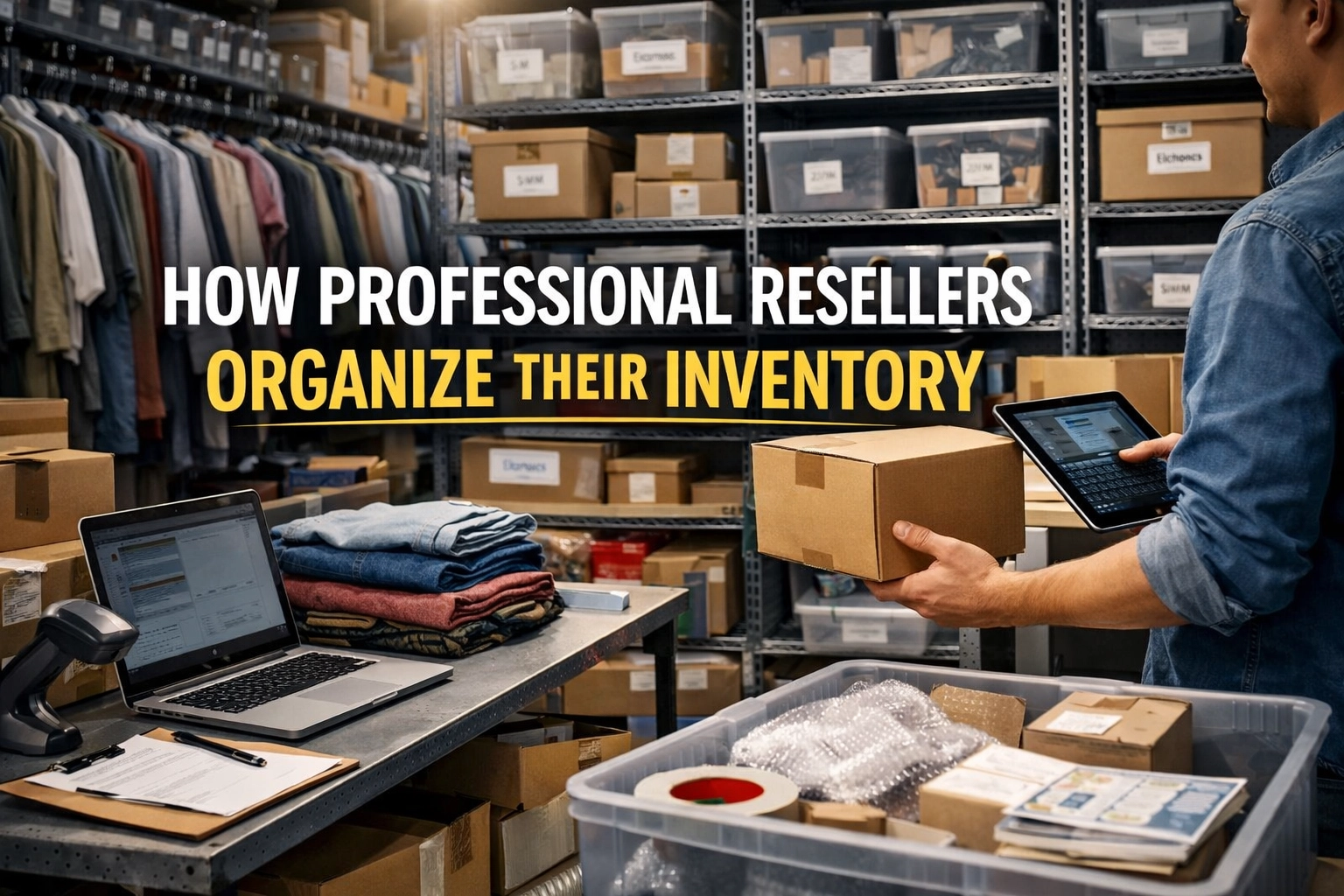
If you want to move from “casual hobbyist” to “professional powerhouse,” you need a system. Not just any system: an inventory organization method that scales with you. At Power Selling Mom, we’re all about working smarter, not harder. Today, I’m pulling back the curtain on how I manage my inventory using a simple, foolproof SKU and bin system that keeps my sanity intact and my customers happy.
The Secret Sauce: The SKU System
If you aren’t using SKUs, you aren’t running a business; you’re managing a very expensive pile of laundry. SKU stands for Stock Keeping Unit, and it is the backbone of your entire operation.
A SKU is a unique identifier you assign to an item the very second you list it. This number (or code) tells you exactly where the item is located in your physical space. The goal is to be able to find any item in your inventory in under sixty seconds.
How I Build My SKUs
My system is designed for both personal inventory and consignment items. Since I’m a consignment seller, I need to know not just where an item is, but who it belongs to so I can pay them out correctly once it sells.
Here is the logic I use:
- The Owner/Source: Start with a name.
- The Storage Location: End with the bin identifier.
Example 1: My Own Inventory
If I list a dress that belongs to me, and it’s going into “Bin B,” the SKU is Danna B. If I have another dress, it might be Danna C or Danna D, depending on which bin has space.
Example 2: Consignment Inventory
Let’s say I’m selling for my friend Sharon. When I list a pair of jeans for her and put them in “Bin B,” the SKU becomes Sharon B. If I list more items for her later and they go into “Bin C,” they become Sharon C, Sharon D, and so on.
Why This Logic Wins:
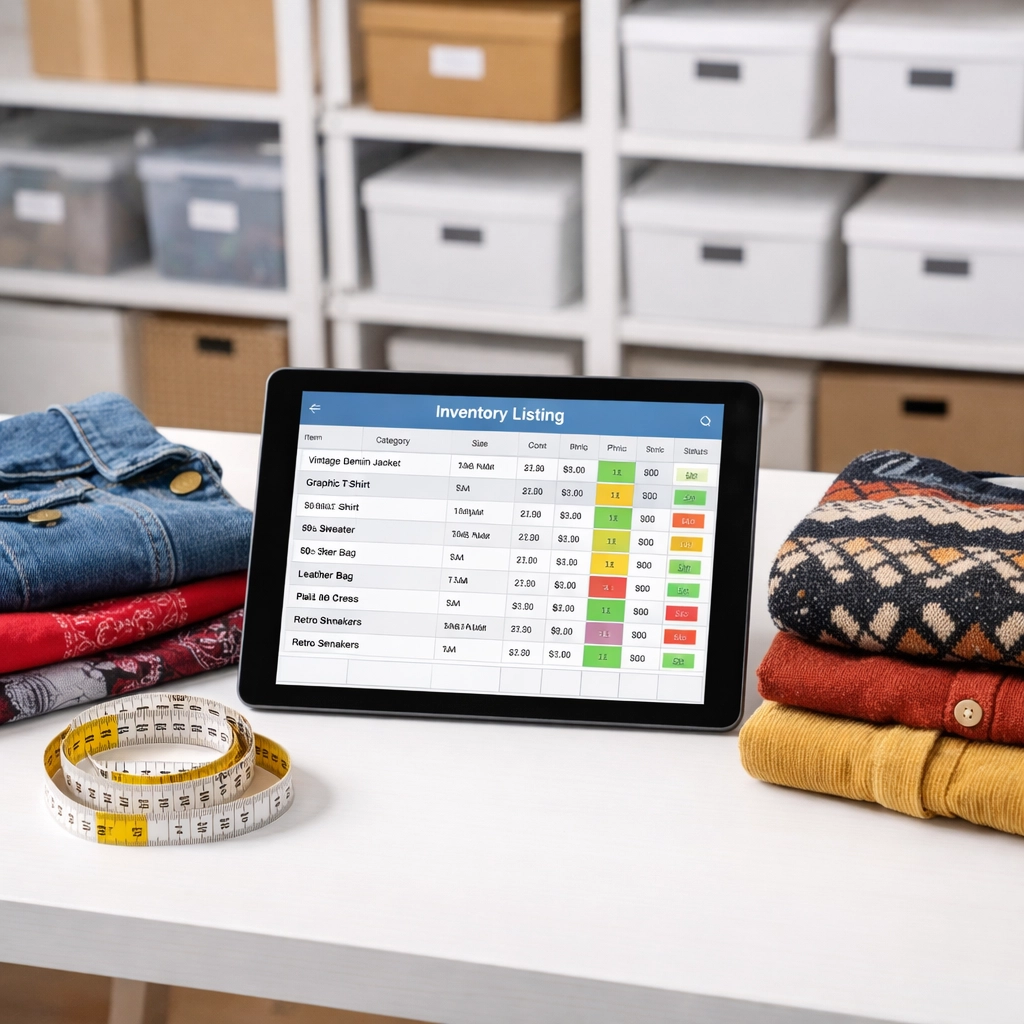
- Searchability: When an item sells, I look at the custom label or SKU field in my listing. It says “Sharon B.” I go straight to Bin B and grab it. No guessing games.
- Accounting: When I run my end-of-month reports, I can filter by the name “Sharon” and see exactly what sold for her.
- Simplicity: You don’t need fancy software to start. You just need a consistent naming convention.
Physical Storage: The Power of the Bin
Now that you have your digital “map” (the SKU), you need the physical “territory.” I am a huge fan of clear or sturdy plastic tubs. Rubbermaid is a classic for a reason: they last forever, and they stack beautifully.
The “All Four Sides” Rule
This is a small tip that will change your life. Most people slap a label on the front of a bin and call it a day. But what happens when you’re in a cramped storage unit or your garage, and the bin gets turned around? You’re stuck playing “Identify the Tub.”
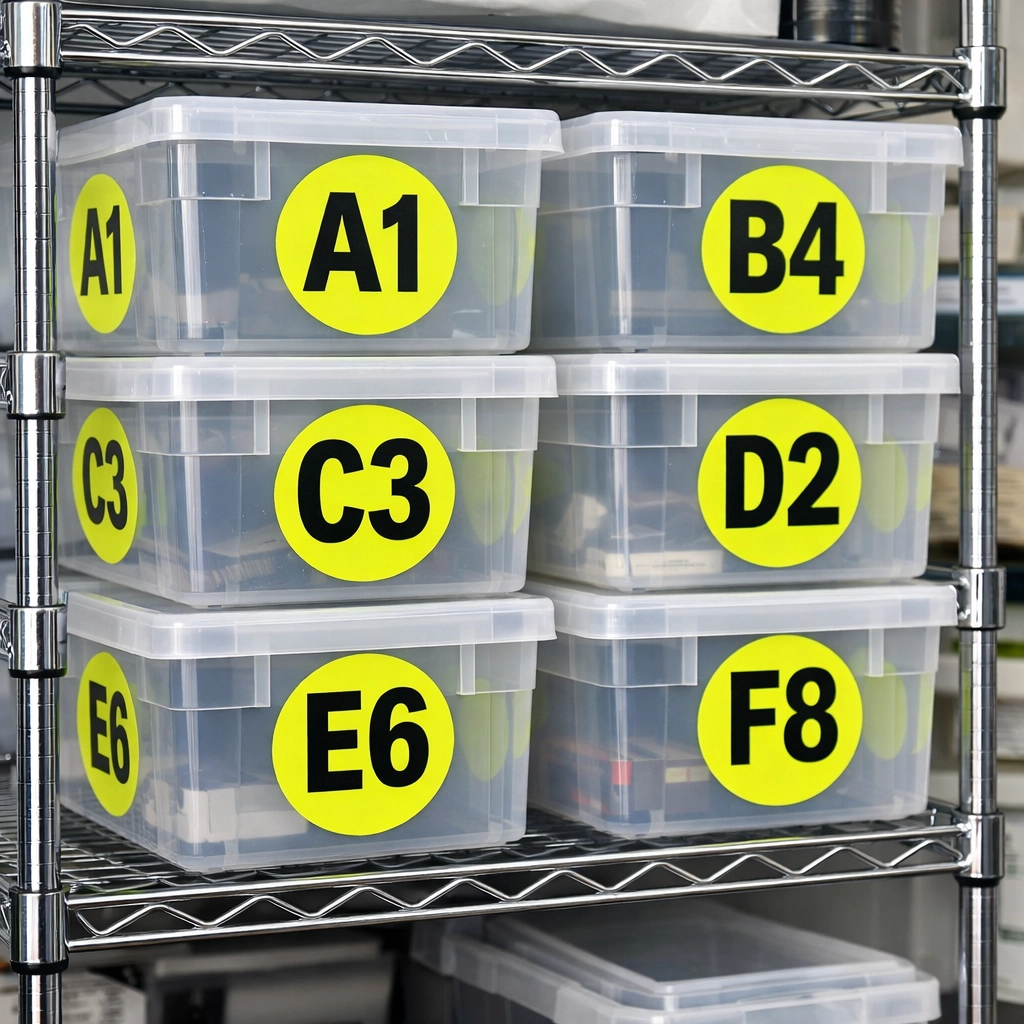
The Professional Tip: Place a sticker with the bin’s letter or number on all four sides of the tub.
- No matter which way you shove it onto the shelf, you can see the label.
- If you’re stacking them, you can see the label from the side or the end.
- It saves you from having to lift or rotate heavy bins just to see what’s inside.
What Supplies Do You Need?
To get organized like a pro, grab these basics:
- Uniform Bins: Try to stick to the same brand and size so they stack safely.
- Heavy Duty Labels: I like large neon stickers or a high-quality label maker.
- Shelving Units: Metal or heavy-duty plastic shelving keeps the weight off the bottom bins in a stack.
- A “Mailing Station” near your inventory: Keep your tape, scales, and poly-mailers close to your bins to minimize steps.
Scaling with AI and Community
Staying organized is just one piece of the puzzle. The world of reselling is moving fast, and if you aren’t using the latest tools, you’re leaving money on the table. This is exactly why I created the AI for Resellers membership.
For just $6 a month, you get access to a community of like-minded sellers and training on how to use artificial intelligence to speed up your listings, write better descriptions, and find those high-profit items faster than ever. It’s the best investment you can make in your business today.
Join us at aiforresellers.com and let’s grow together!
Why Professional Organization Matters for SEO and Growth
You might be wondering, “Danna, what does my messy closet have to do with Google?” More than you think!
Google likes businesses that are efficient and provide a good user experience. When you are organized, you ship faster. When you ship faster, you get better reviews. When you get better reviews, platforms like eBay and Amazon “bump it up”: meaning they show your listings to more people.

Quick Wins for Your Inventory Flow:
- List and Bin Immediately: Don’t let “to-be-filed” piles grow. As soon as that listing goes live, the item goes into its assigned SKU bin.
- Keep a “Returns” Bin: Have one specific spot for items that are sent back so they don’t get lost in the shuffle of new stock.
- Audit Regularly: Once a quarter, go through a bin to make sure the items inside match what’s listed online. This prevents the “ghost inventory” heartbreak (when you sell something you no longer have).
- Use Bullet Points in Your Notes: When you’re tracking your inventory in a spreadsheet, use clear headers like “Cost of Goods,” “Date Sourced,” and “Storage Location.”
Inventory Organization Checklist
If you’re feeling overwhelmed, just follow these steps to get started:
- Clear the floor: You need space to sort.
- Group by owner: If you do consignment, separate items by client first.
- Assign the Bin: Decide which bin the item fits in.
- Create the SKU: Write it down or enter it into your listing tool (e.g., Sharon B).
- Label the Bin: Mark all four sides.
- Store and Stack: Put the bin away and move to the next item.
The Mental Benefit: Peace of Mind
The biggest benefit of a professional inventory system isn’t actually the time saved: it’s the stress removed. When your phone pings with a sale at 11:00 PM, you don’t want to feel a pit in your stomach wondering if you can find the item. You want to feel the win!
With a solid SKU system and clearly labeled bins, you can walk into your storage area, grab the item, and have it packed in minutes. That is how you scale. That is how you turn a side hustle into a career.
You May Have Missed!
If you’re looking for more ways to level up your reselling game, check out my guide on 20 Profitable Items Resellers Look for at Thrift Stores or explore our shop for tools that help you succeed.
Ready to get organized? Start with one bin today. You’ve got this!