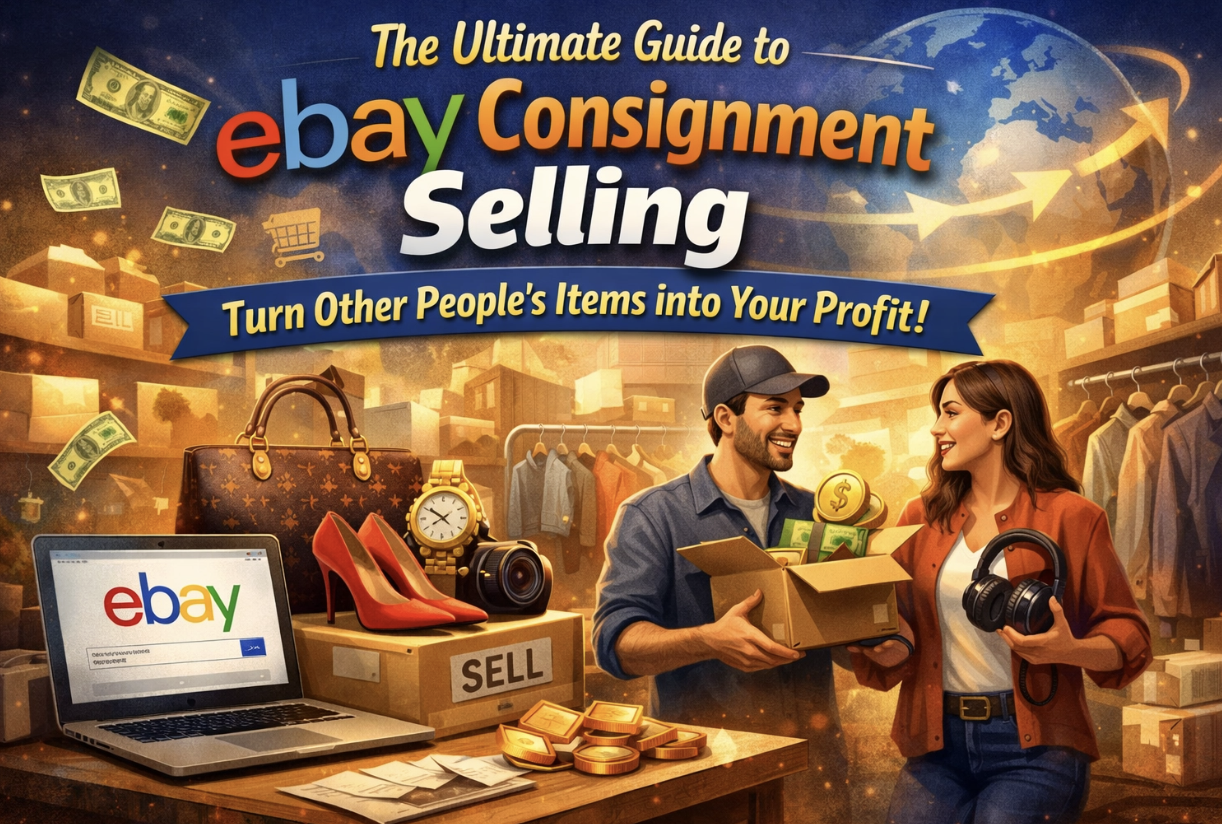
The Ultimate Guide to eBay Consignment Selling: Turn Other People’s Items into Your Profit!
Estimated Reading Time: 11 minutes
One of the biggest hurdles every reseller faces is “the spend.” You know the feeling: staring at your bank account and wondering if you should drop your last $200 on a pallet of returns or a stack of vintage designer jeans. But what if I told you that you could fill your eBay store with high-value inventory without spending a single dime of your own money upfront?
Welcome to the world of consignment selling on eBay.
Consignment is the ultimate “low-risk, high-reward” business model. Instead of buying inventory, you act as the service provider. You sell items owned by other people, take a healthy commission for your time and expertise, and pay the owner the rest. It’s a win-win: they get cash for their clutter, and you get a profitable business with zero inventory cost.
Whether you are a seasoned pro looking to scale or a newbie searching for 5 great reasons to sell items online, consignment is a strategy you need in your toolkit.
What Exactly is eBay Consignment Selling?
At its core, consignment selling on eBay is a service-based business. You are the bridge between a person who has “stuff” and a global marketplace of buyers. You handle the “dirty work”: the researching, photographing, listing, packing, and shipping, and in exchange, you keep a percentage of the final sale price.
There are generally two ways to dive into this:
- eBay’s Official Consignment Service: eBay has partnered with expert third-party sellers to handle luxury items (think designer handbags and high-end watches). You ship the items to them, and they do the rest.
- Starting Your Own Consignment Business: This is where the real freedom is. You build your own brand, find your own clients, and set your own commission rates.
Starting your own operation allows you to control the quality of the items you take in and build a local reputation as the “eBay expert” in your community.
Path 1: Using eBay’s Official Service
If you have a high-value item but don’t want to manage the listing yourself, eBay’s official service is a streamlined option. They focus on “heavy hitters”: items that are likely to sell for hundreds or thousands of dollars.
The Commission Structure for Official Partners:
- Items $0–$299.99: You get 60% (but watch out for that $15 admin fee!).
- Items $300–$999: You get 60%.
- Items $1,000–$4,999: You get 75%.
- Items $5,000+: You get 80%.
This is great for a one-off luxury item, but if you want to build a long-term income stream, you’ll want to be the one receiving those commissions, not paying them!

Path 2: How to Set Up Your Own Consignment Business
Ready to be the boss? Setting up a consignment business requires more than just an eBay account. You need a system that protects you, your clients, and your reputation.
1. The Legal Stuff and “The Contract.”
Never, and I mean never, take an item from someone without a signed contract. Even if it’s your Aunt Martha. Money has a funny way of changing relationships, and a written agreement keeps everything professional.
Your contract should clearly state:
- The Commission Split: Who gets what?
- Fees: Who pays the eBay fees and shipping? (Pro tip: I recommend taking your commission after eBay fees are deducted).
- Listing Duration: How long will the item stay active? (Usually 60–90 days).
- Price Adjustments: Do you have the right to lower the price to get it moved?
- Unsold Items: What happens if it doesn’t sell? Do they pick it up, or do you donate it?
2. Deciding Your Commission Split
Don’t undervalue your time! Selling on eBay is a skill. A common mistake is taking items that are too cheap. If an item sells for $20, and you take a 50% commission, you’ve just done an hour of work for $10 (before taxes!).
A winning commission model looks like this:
- Items under $50: Decline them, or charge a flat “listing fee” plus commission.
- Items $50–$500: A 50/50 split is standard.
- Items $500+: You might drop your commission to 30% or 40% to remain competitive for high-value goods like Michael Jordan sports memorabilia.
Inventory Management: Don’t Lose Your Mind (or the Item!)
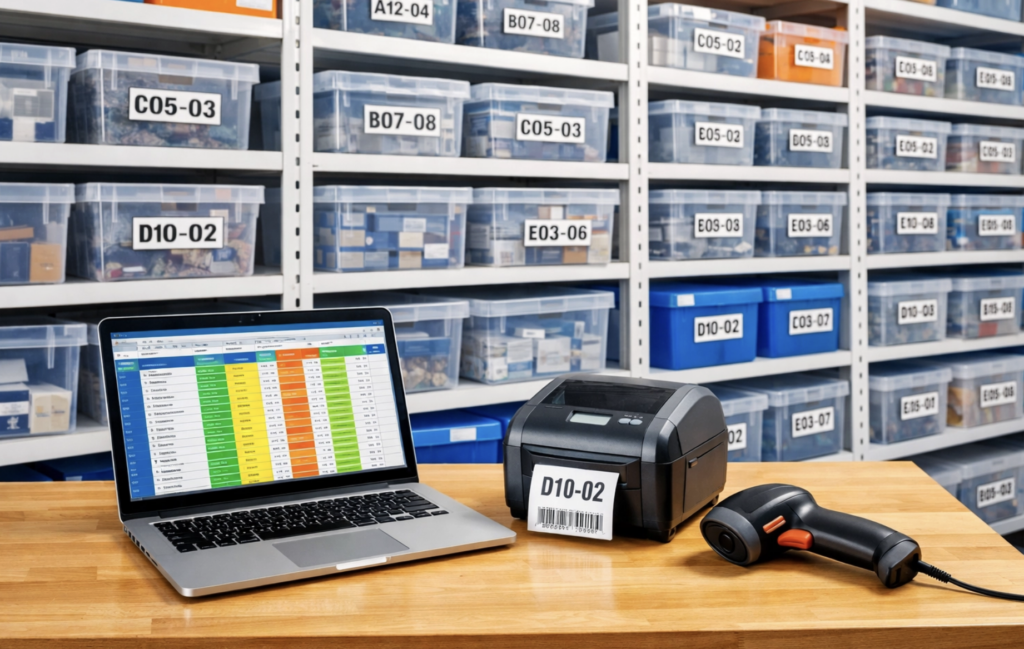
When you start consignment selling on eBay, your “death pile” of unlisted items isn’t just yours: it belongs to someone else. This adds a layer of responsibility. You need a bulletproof tracking system.
I recommend a simple coding system: CLIENTCODE-ITEMNUMBER-DATE.
For example, if Diana Smith brings you her first item in October 2026, the code might be DSMITH-001-1026.
Penny’s Pro-Tip: Keep client items in separate, labeled bins. Never mix “Client A” with “Client B.” This prevents the nightmare scenario of shipping the wrong item to the wrong buyer.
Sourcing Your First Clients
You don’t need a billboard to find clients. You just need to let people know you are open for business.
- Friends and Family: Start here to “test the pipes,” but keep it professional.
- Social Media: Post a “Before and After” of a clutter-to-cash transformation on your Facebook or Instagram.
- Local Businesses: Reach out to local boutiques or antique shops. Sometimes they have “stale” inventory they want to move but don’t have the time to list online.
- Estate Sales: Talk to the people running the sale. Often, the family has leftovers they don’t know what to do with.
Common Pitfalls to Avoid
Even the experts stumble sometimes. Here are the “red flags” to watch for in consignment selling on eBay:
- The “Emotional Value” Trap: A client thinks their 1990s Beanie Baby is worth $5,000 because they saw a viral post. If a client won’t agree to realistic market pricing based on “Sold” listings, walk away. You can’t sell emotion; you can only sell what the market will pay.
- Taking “Junk”: Your time is your most valuable asset. If you spend three hours cleaning, photographing, and listing a $15 item, you are losing money. Set a minimum value for items you’ll accept.
- Vague Payout Timelines: Be clear about when the client gets paid. I recommend paying out 14–30 days after the item is delivered to the buyer. This covers the eBay “money back guarantee” window in case of a return.
- Neglecting Communication: Send your clients a quick monthly update. Even if nothing has sold, they will appreciate knowing you are still working on it.
Ready to Turn Clutter into Commission?
Consignment selling on eBay is more than just a way to make extra cash; it’s a professional service that helps people while padding your own pockets. It removes the biggest barrier to entry in reselling: capital, and replaces it with your own talent and hustle.
Contact Me – Call me with your questions or with any items you would like me to sell for you: +1 (941) 267-8154
- Struggling for Reselling Profits? 50+ AI Prompt Examples to Try Today
- Top 10 eBay Selling Strategies for Q4 Success
- What eBay’s Watchlist Data Says About Fall 2026 Resale Trends
- How to Start a Podcast for Your Reselling Business (Using Riverside)
- My AI Sidekick: How AI Can Make Everyday Life and Business Easier