Estimated Reading Time: 9 minutes
You know that rush of adrenaline when you step into a thrift store? The smell of old books and laundry detergent, the racks packed so tight you can barely move a hanger, and the feeling that a $200 hidden gem is just waiting for you to find it.
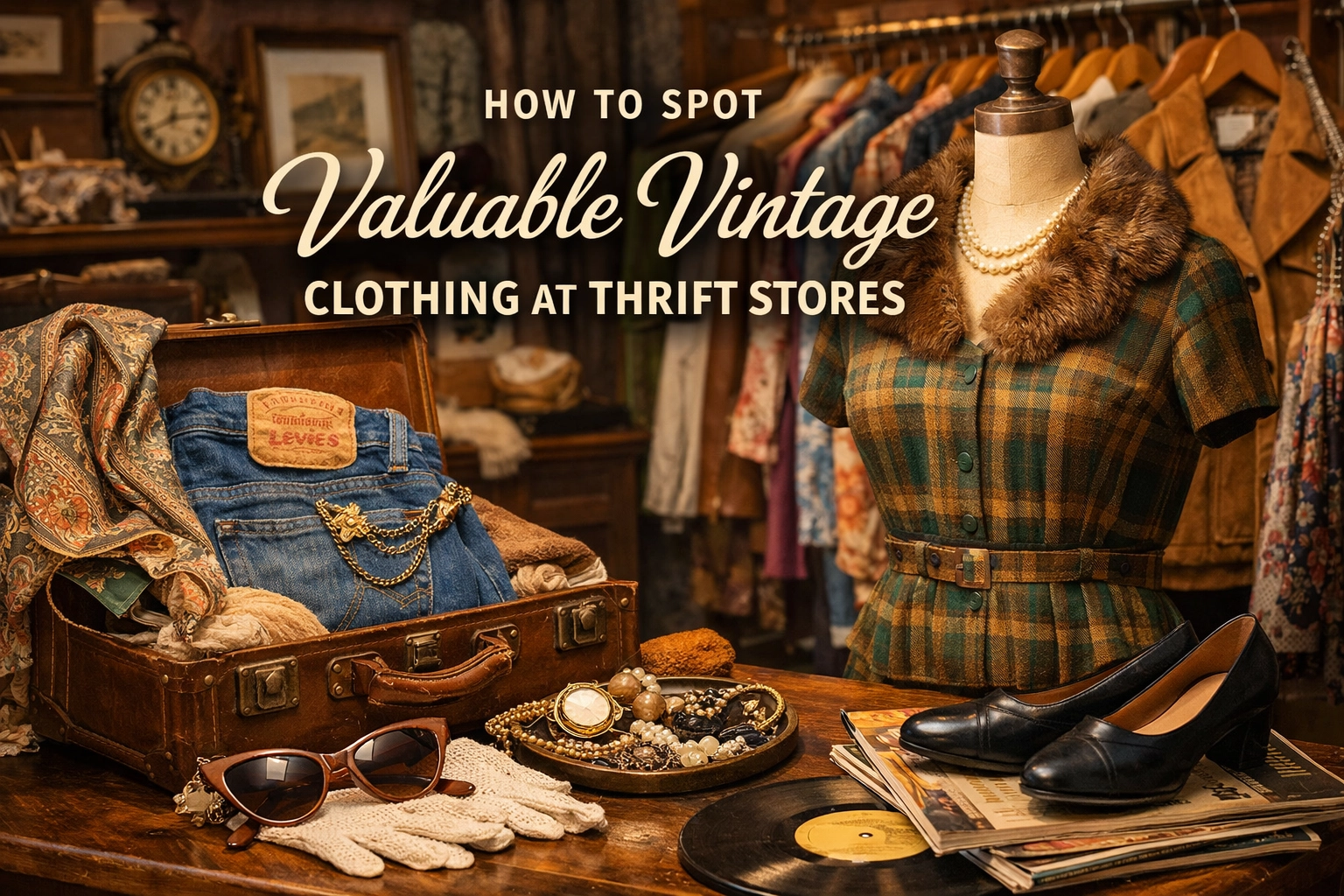
Vintage clothing flipping is absolutely on fire right now. Whether it’s 90s streetwear, 70s boho chic, or 50s workwear, buyers are hungry for pieces with history and character. But here’s the thing: you can’t just buy every old-looking shirt and expect to strike gold. You need to know exactly what to look for so you don’t end up with a closet full of “dated” junk instead of “vintage” treasures.
In this guide, I’m going to walk you through the secret language of vintage clothing. From the “single stitch” obsession to decoding mysterious RN numbers, you’re about to become a pro at spotting high-value items in the wild.
Start with the Tag: The Storyteller of the Garment
The very first thing you should do when you find an interesting piece is flip that collar and look at the tag. The tag is the “ID card” of the garment. It tells you where it was made, what it’s made of, and often, exactly when it was born.
The Font and Logo Test
Modern tags are almost always printed or have very clean, sans-serif fonts (think modern, minimalist letters). Vintage tags, especially from the 50s through the early 80s, often feature serif fonts (the ones with the little “feet” on the letters) or even embroidered, woven logos. If the logo looks “fancy” or uses a script font that looks like a retro diner sign, you’re likely holding something older.
“Made in USA” is a Green Flag
While “Made in USA” doesn’t automatically mean a piece is worth hundreds, it is a massive clue for dating. Up until the late 70s and early 80s, a huge portion of clothing sold in America was actually made here. If you see a tag that says “Made in USA,” it’s a sign the garment likely predates the massive shift to overseas manufacturing in the 90s.
Decoding RN Numbers
Ever see a little “RN” followed by a string of numbers on the back of a care tag? That’s the Registered Identification Number. This is a goldmine for research.
- 5-digit RN numbers: Usually indicate the item was made between the 1960s and early 1980s.
- 6-digit RN numbers: Usually indicate the mid-80s to the present.
You can actually look these numbers up on the FTC website to find the manufacturer, which helps if the main brand tag has been cut out!

The “Single Stitch” Obsession
If you hang around the vintage T-shirt community for more than five minutes, you’ll hear the term “single stitch.” To the untrained eye, it looks like nothing. To a vintage pro, it’s the difference between a $10 shirt and a $100 shirt.
What is it?
Look at the hem of the sleeve or the bottom of a T-shirt. On modern shirts, you’ll almost always see two parallel lines of stitching (double stitch). This became the industry standard around 1994 because it’s more durable for mass production.
A “single stitch” shirt has only one line of visible stitching on the hems. This indicates the shirt was likely made before the mid-90s. If you find a single-stitch shirt with a cool graphic, like an old band, a 3D Emblem truck design, or a 1980s cartoon, you’ve likely found a winner.
Why it matters
Collectors crave authenticity. The single stitch is a quick visual “proof” that the shirt is a true vintage piece and not a modern reproduction or a “reprint” from a big-box retailer.
Fabric Clues: Trust Your Hands
In the world of fast fashion today, everything is a blend of polyester, rayon, and “who-knows-what.” Vintage clothing was often made with higher-quality, natural materials that feel different to the touch.
The Weight of Quality
Pick up a modern wool coat, and then pick up one from the 1960s. The vintage one will likely weigh twice as much. Older garments weren’t “thinned out” to save on shipping costs; they were built to last decades.
- Wool: Look for the “Woolmark” logo. If you see a tag that says “100% Pure Wool” with the interlocking yarn loop logo, you’re looking at a quality piece.
- Silk: Real vintage silk has a specific “crunch” or “scroop” to it when you squeeze it. It feels cool to the touch and has a subtle luster that polyester can’t mimic.
- Cotton: Look for “heavyweight” cotton. 90s streetwear brands like Carhartt or early Nautica used thick, rugged cotton that develops a beautiful “patina” (natural fading) over time.

The Union Label: The Ultimate Authenticator
If you find a small, colorful tag tucked into a side seam or under the main brand tag that says “ILGWU” (International Ladies’ Garment Workers’ Union), stop everything. You’ve hit the vintage jackpot.
The ILGWU label went through several designs over the decades:
- Blue and White (1950s-1960s): Usually means the piece is mid-century.
- Red, White, and Blue (1970s-1990s): This is the most common one you’ll find. It often features a small “Made in USA” flag.
These labels prove the garment was made in a unionized American factory, which almost always equates to better construction and higher resale value. NOTE: This website has great information about union labels along with a Timeline and photos. Learn more at: Cornell University
Brand History and Hidden Gems
Sometimes the brand isn’t “Nike” or “Levi’s,” but it’s still worth a fortune. This is where brand history research comes in.
There are “dead” brands: companies that no longer exist but have a cult following. Think of names like Gunne Sax (70s prairie dresses that sell for hundreds), Big Mac (vintage workwear), or H Bar C (Western wear).
How to Research on the Fly
When you’re standing in the thrift aisle and find a brand you’ve never heard of that feels expensive, don’t guess. Use your phone!
- Check the “Sold” listings on eBay or Poshmark.
- Look for specific features like metal zippers (brass zippers are often older than plastic ones).
- Check for “V-stitch” construction on the back of old jeans.
You May Have Missed: Our guide on Side Hustles for Women Over 50 where we talk about how reselling fits into a flexible lifestyle!

Speed Up Your Research with AI
Let’s be real: trying to research every tag and fabric while you’re balancing a heavy basket at Goodwill can be exhausting. That’s where technology becomes your best friend.
At Power Selling Mom, we’ve embraced the power of AI to make reselling faster and more profitable. If you’re tired of spending hours writing descriptions or trying to figure out if a brand is worth the flip, you need to check out our AI for Resellers membership.
For just $6/month, you get access to a community and tools that help you:
- Generate SEO-optimized descriptions in seconds.
- Research brand histories and “sold” comps without the headache.
- Stay ahead of trends so you know what to buy before everyone else does.
It’s the best investment you can make for your reselling business. Join the AI for Resellers community here!
Construction Details: The Small Stuff
Finally, look at how the garment is actually put together.
- Zippers: Is it a metal Talon, YKK, or Crown zipper? Metal zippers almost always indicate a garment is older than the mid-70s. Plastic zippers are more modern.
- Seams: Check the inside seams. Are they “pinking sheared” (look like zig-zags)? This was a common way to finish edges in the 40s and 50s.
- Buttons: Are they plastic, or are they mother-of-pearl, wood, or heavy metal? High-quality buttons are a hallmark of high-quality vintage.

Ready to Hit the Racks?
Spotting vintage isn’t just about luck; it’s about training your eyes and your hands. The more you touch high-quality wool and look at 50-year-old tags, the easier it becomes. You’ll start to “see” the vintage items from across the store!
Thrifting for vintage is one of the most rewarding parts of the reselling game. Not only are you saving incredible pieces of history from the landfill, but you’re also building a business that’s unique and profitable.
Spread the love! If you found these tips helpful, share this post with your fellow thrifting friends and let’s all find some treasures this weekend!